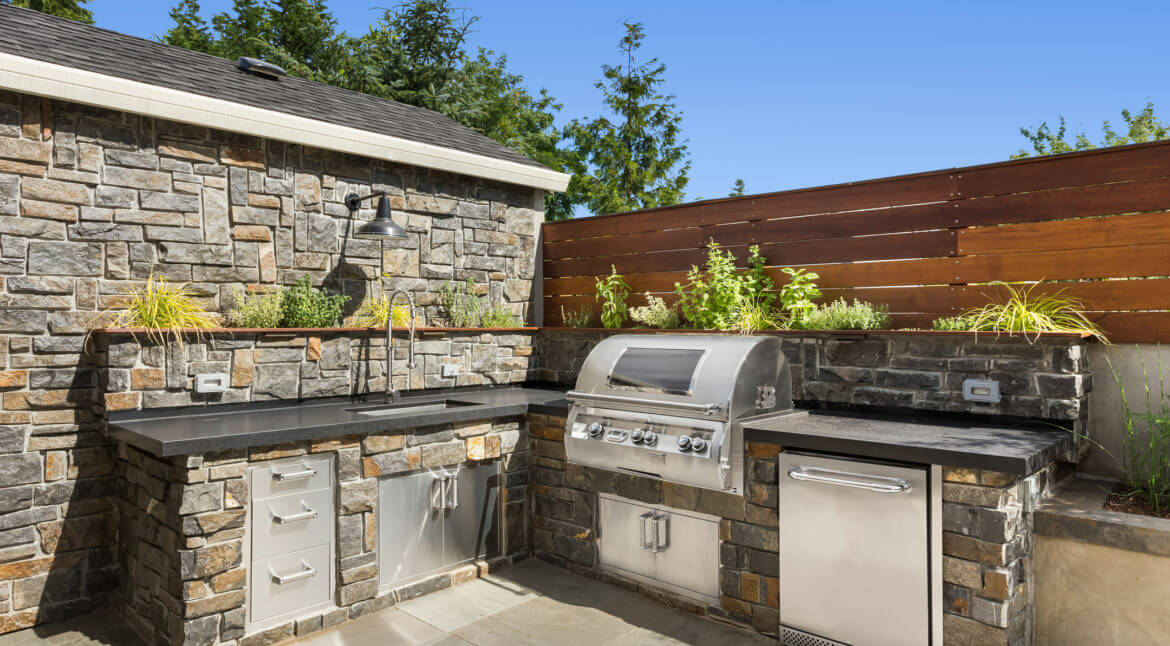
An outdoor kitchen with a built-in grill, running water and a prep sink is one of several backyard upgrades that will pay off with a higher home value, but the plumbing and gas work behind it require a professional. You’ll also need the right materials and, in most cases, a permit. Before any digging starts, map out your layout, locate your existing gas and water lines and talk to a licensed plumber about what the job will actually involve. Gas line work, especially, should never be a DIY project, no matter your level of experience.
Outdoor Kitchen Plumbing Services | Plumbers 911
What’s Happening
Outdoor kitchens have become one of the fastest-growing home improvement projects in the country. What once meant a basic gas grill on a patio now often includes built-in grills, side burners, refrigeration, prep sinks, bar areas and dedicated outdoor lighting — all of which require a combination of gas, water and drainage. Homeowners who start these projects in spring are in the best position to enjoy a finished, functional space by the time summer entertaining begins.
The planning window matters because outdoor kitchen plumbing projects involve multiple trades, permit applications and inspections that take time to coordinate. Running a gas line from the home’s meter or a propane tank to the outdoor kitchen location, tying a sink into the home’s water supply and drain system and ensuring all work meets local code requirements isn’t something that can be scheduled and completed in a weekend. Homeowners who reach out to a licensed plumber in early spring typically have far more flexibility in scheduling and design decisions than those who wait until May.
Why It Happens
The most common source of outdoor kitchen plumbing complications is underestimating the distance and routing involved. Homeowners often select an outdoor kitchen location based on where it will look best or where the patio already exists, without fully accounting for how far that location is from the nearest gas line, water supply and drain connection. A kitchen positioned at the far end of a large yard may require trenching 80 or more feet of pipe, which changes the project scope, the permitting requirements and the materials needed compared to a kitchen immediately adjacent to the home.
A second recurring issue is the use of materials not rated for outdoor or underground installation. Gas supply lines, water supply lines and drain pipes for outdoor applications must be rated for buried or exposed outdoor use, and the fittings, valves and connectors at the outdoor kitchen end must be appropriate for the temperature range and UV exposure in the installation environment. Interior-grade components used outdoors can degrade, corrode or fail in ways that are difficult to detect until a leak or blockage makes the problem obvious.
The third factor is skipping the permit process. Gas line work and outdoor plumbing that connects to the home’s systems requires a permit in virtually every jurisdiction. Unpermitted work creates real problems: it may not meet safety standards, it won’t be covered by homeowner’s insurance if something goes wrong and it can complicate a home sale if an inspector discovers that significant utility work was done without documentation. The permit process exists to protect homeowners, and a licensed plumber will pull the necessary permits as part of the standard job.
What You Can Safely Do Now
There is meaningful planning work homeowners can complete before a plumber arrives. Doing that work in advance makes the professional consultation more productive and the installation faster. Start with your layout. Decide where the kitchen will sit, what appliances you want to include and approximately where the prep sink and grill will be positioned. That information gives a plumber the starting point needed to assess supply routes and drain options.
- Sketch your outdoor kitchen layout to scale. A rough drawing showing the kitchen’s position relative to the home, the locations of the grill, sink and any other gas appliances and approximate dimensions gives a plumber the context to assess routing options at the initial consultation.
- Locate your home’s gas meter or propane tank. Note its location relative to the planned outdoor kitchen. The distance and any obstacles between the two — existing structures, hardscaping, mature tree roots — will influence the supply route and installation approach.
- Identify the nearest interior water supply and the nearest interior drain access point. For the sink, a plumber will need to tie into the home’s water supply and route a drain back to the existing drain system or to an appropriate outdoor drain solution. Knowing where the nearest access points are helps narrow down the most practical sink location.
- Check your local building department’s permit requirements. Most municipalities publish permit requirements online. Knowing whether your project requires separate gas and plumbing permits — and whether the jurisdiction requires inspections at specific stages — helps set realistic timeline expectations.
- Inventory your planned appliances. Make a list of every gas appliance you plan to include — grill, side burner, pizza oven, patio heater — along with their BTU ratings, if available. This information helps a plumber size the gas supply line correctly for the total load.
- Note your home’s gas type. Natural gas and propane operate at different pressures and require different fittings and regulator configurations. Know which fuel type your home uses before the plumber arrives so the consultation can address the right supply system from the start.
When to Call a Plumber
Call a plumber before any work begins on the gas or water supply components of your outdoor kitchen. Gas line installation and modification are not DIY projects. Every state requires a licensed professional to perform the work, and most jurisdictions require a licensed plumber or gasfitter to pull the permit and perform the work. Even homeowners with significant construction experience should not attempt to tap into an existing gas line, run new gas pipe or make connections at an outdoor appliance without a licensed contractor involved.
For the water supply and sink drain parts of the project, call a plumber if the installation requires connecting to the home’s existing supply or drain lines, if the kitchen location requires trenching to run buried pipe or if you’re unsure whether your home’s water pressure is adequate to serve an outdoor sink without affecting indoor fixtures. You should also call immediately if you smell gas near an existing outdoor grill or gas connection at any point. Remember to turn off the gas supply at the shutoff valve, move away from the area and make the call before attempting any inspection yourself.
What Plumbers See in the Field
When called to assess or repair outdoor kitchen plumbing, the most common finding is gas connections made with components not designed for the application. Flexible gas connectors intended for indoor appliances are sometimes used to connect outdoor grills, and while they may function initially, they’re not rated for outdoor UV and weather exposure and can degrade in ways that aren’t visible until a fitting fails. Similarly, plumbers frequently find outdoor kitchen sinks connected to a garden hose bib rather than a dedicated supply line. This setup works for rinsing, but provides inadequate pressure and flow for actual kitchen use. It also leaves the line vulnerable to freezing in any climate when the temperatures drop below freezing.
On new installation calls, the most common planning gap plumbers encounter is an appliance list that has grown significantly between the initial layout conversation and the start of the project. A homeowner who planned for a single grill and a small sink may add a side burner, an outdoor refrigerator tap and a patio heater before the plumber arrives — and the gas supply line sized for the original load may not be adequate for the expanded list. Bringing the final appliance list to the initial consultation, including BTU ratings where available, allows the plumber to size the supply correctly the first time rather than returning to upsize the line after the kitchen is already built around it.
What a Plumber Will Do
When a plumber arrives to plan or install outdoor kitchen plumbing, the process begins with a site walk that covers the planned kitchen location, the existing gas supply entry point, the nearest water supply and drain access and any site conditions — existing hardscaping, grade changes, tree roots — that may affect the routing. For the gas line, the plumber will calculate the total BTU load based on the planned appliances and size the supply pipe to deliver adequate pressure at the furthest appliance under full load. The plumber will map the route from the meter or tank to the outdoor kitchen, identify where the line will be buried or run exposed and determine the connection point and shutoff valve locations.
During installation, the plumber will run properly rated gas pipe and fittings, install a dedicated outdoor shutoff valve in an accessible location, connect to the appliances using rated flexible connectors and perform a pressure test of the completed gas system before any appliances are operated. For the water supply and sink, the plumber will tie into the home’s supply lines, run the outdoor supply using pipe rated for the installation conditions, install shutoff valves accessible for winterization and connect the drain to the home’s existing system or to an approved outdoor drain. At the close of the job, the plumber will coordinate any required inspections and provide documentation of the completed work.
Prevention Tips
The most important seasonal maintenance task for an outdoor kitchen is winterization of the water supply lines. At the end of each season, shut off the dedicated supply valve inside the home that feeds the outdoor sink, open the outdoor faucet to drain any remaining water from the line and leave the outdoor valve in the open position so residual water can escape as temperatures drop. If your installation includes a drain trap under the outdoor sink, have a plumber advise on how to properly winterize it for your climate — a trap left full of water in freezing weather can crack and require replacement in the spring.
For the gas supply side, check the visible portions of the gas line and connections at the start of each grilling season. Look for any signs of corrosion on fittings, confirm that the flexible connectors at each appliance are not kinked, cracked or showing wear and verify that the outdoor shutoff valve operates freely. If any fitting shows visible rust, white mineral deposits or physical damage, have a plumber evaluate it before operating the appliance. Gas connections that look fine visually can still have small leaks. An annual check by a plumber, including a pressure test of the system, is a practical step for any outdoor kitchen that sees regular use.
Every two to three seasons, have a plumber inspect the entire outdoor kitchen plumbing installation, including buried supply lines (if accessible), all valves and fittings and the drain connection. Outdoor installations face more environmental stress than their indoor counterparts, and a proactive inspection catches minor issues before they become urgent repairs mid-season.
FAQs
What does outdoor kitchen plumbing installation actually involve?
For most outdoor kitchens, installation involves two separate systems: a gas supply line running from the home’s existing gas meter or propane tank to the kitchen location, and a water supply and drain system for the prep sink. The gas line requires sizing based on the total BTU load of all planned appliances, proper pipe and fitting materials for buried or exposed outdoor use and a pressure test before operation. The water supply and drain require connecting to the home’s existing plumbing, running outdoor-rated pipe to the kitchen location and providing an appropriate drain connection and shutoff valves for winterization. Both systems require a permit in most jurisdictions and must be installed by a licensed contractor.
Can I connect my outdoor kitchen grill to an existing gas line that serves another appliance?
Potentially, but only if the existing line has adequate capacity. Gas lines are sized for a specific total load, and tapping a new high-BTU appliance off a line that is already serving other appliances can reduce pressure to all connected appliances and cause performance problems. A plumber can assess the existing line’s capacity against your planned total BTU load and advise whether the connection is feasible or whether the supply line needs to be upsized. This determination requires a calculation based on pipe diameter, length, run configuration and total connected load.
What happens if I skip the permit for the gas line installation?
Unpermitted gas work creates several problems beyond the immediate safety risk of work that hasn’t been inspected. If something goes wrong — a gas leak, a fire, property damage — homeowner’s insurance may deny the claim on the grounds that the work was done without a permit. If you sell your home, a buyer’s inspector may flag unpermitted utility work, which can delay or derail the sale and require expensive remediation. Many jurisdictions also have financial penalties for unpermitted gas work. A licensed plumber will pull the required permits as a standard part of the job, and the inspection process provides independent verification that the work was done correctly.
I already have a natural gas grill connected by a flexible hose. Do I really need to upgrade to a hard-piped line?
If the flexible connector is properly rated for outdoor use and was installed correctly, it may be adequate for a single grill. However, flexible connectors are designed for shorter runs and are not a substitute for a hard-piped gas supply when adding multiple appliances. This is especially true when the distance from the gas source is significant, or when the connector shows any signs of wear or weathering. They also have a finite service life and should be inspected regularly. For a fully built outdoor kitchen with multiple gas appliances, a plumber will typically recommend a hard-piped supply with a dedicated outdoor shutoff. It’s the more reliable and code-compliant approach for a permanent installation.
Call Plumbers 911 Today
If you’re planning an outdoor kitchen with gas lines and a sink, it’s safer and faster to get a qualified plumber involved before the project begins — especially given that gas line work requires a licensed professional and a permit in virtually every jurisdiction. Getting the supply sizing, materials and routing right from the start means a kitchen that performs reliably every season, and that is fully documented for insurance and resale purposes.
Our affiliated licensed, bonded and insured contractors will guide you through the process and ensure all the plumbing work is done correctly. They employ highly qualified plumbers who receive over 10,000 hours of training and undergo rigorous background checks. Call Plumbers 911 today to speak with one of our contractors in your area.