Hard water affects more than 85 percent of homes in the United States, and its most consistent impact isn’t on the water itself. The appliances that hard water flows through every day can suffer the most. Dishwashers and washing machines are particularly vulnerable because they heat water, circulate it through narrow passages, and rely on precision components that can degrade over time from mineral scale. If your dishwasher leaves a white film on glassware or your washing machine requires frequent service calls, hard water is the likely culprit.
A plumber doesn’t repair the inside of a dishwasher or washing machine, but a plumber can address the water that’s damaging them. That means testing your home’s water hardness, inspecting the supply-side plumbing that feeds each appliance and recommending treatment options that protect every appliance in the house at once.
Call Plumbers 911 to connect with a local contractor who can help.
Plumbing Appliance Services and Repair | Plumbers 911
What’s Happening
Hard water carries elevated concentrations of dissolved calcium and magnesium — minerals that are picked up naturally as groundwater moves through rock and soil. The water is safe to drink and use, but those minerals don’t stay dissolved indefinitely. When hard water is heated, the minerals precipitate from solution and deposit as scale on any surface it contacts. Inside a dishwasher or washing machine, that means heating elements, spray arms, inlet valves, hoses and pump components are all accumulating a mineral coating with every cycle.
The damage is gradual and easy to overlook. A dishwasher that runs a little longer than it used to, a washing machine that needs a bit more detergent to get clothes clean, a heating element that draws more power than it did two years ago. None of these changes is dramatic on its own, but together they reflect an appliance working harder against an internal environment that is progressively more restrictive. By the time a homeowner notices a tangible performance decline, scale buildup is typically already significant, and a repair or replacement conversation is often closer than expected.
Why It Happens
The primary mechanism of hard water damage in both appliances is scale accumulation on heating elements. Dishwashers and washing machines heat water to improve cleaning performance, and since mineral precipitation accelerates with temperature, heating elements are where scale accumulation is most concentrated. A heating element coated in scale has to work harder and run longer to reach the target water temperature, which increases energy consumption and thermal stress on the element itself. Scale-insulated heating elements are one of the leading causes of premature appliance failure in hard water areas, and the damage occurs gradually enough that most homeowners don’t associate the failure with water quality.
Inlet valves and internal hoses are the second major impact points. Both appliances fill through solenoid-controlled inlet valves — small electrically operated valves that open to admit water and close when the fill cycle is complete. Scale accumulates on the valve seal and around the solenoid mechanism, eventually causing valves to stick partially open, fail to open fully or develop leaks at the valve body. The hoses and narrow internal passages that distribute water through the appliance are similarly affected, as a spray arm with partially scaled nozzles doesn’t distribute water evenly, and a dishwasher that isn’t reaching every surface of the load will underperform regardless of detergent quality or cycle selection.
For washing machines, hard water degrades performance through interference with detergent effectiveness. The calcium and magnesium ions in hard water react with laundry detergent, reducing the detergent’s cleaning power and requiring more product per load to achieve the same result. The byproduct of that reaction is a soap-mineral residue known as soap scum that deposits in the drum, on seals and in the machine’s internal passages. This residue accumulates between cleaning cycles and creates an environment that can support mold and mildew growth. It’s also the source of the musty odor many front-loading washing machine owners experience. The machine isn’t defective — it’s reacting predictably to a combination of hard water and detergent chemistry.
What You Can Safely Do Now
Before calling a plumber, there are several steps you can take to slow the rate of mineral accumulation and improve appliance performance in the near term. These aren’t substitutes for addressing the underlying water hardness, but they reduce the damage between service visits and give you a clearer picture of what you’re dealing with.
- Run a monthly cleaning cycle on your dishwasher. An empty hot-water cycle with a descaling agent designed for dishwashers removes accumulated mineral deposits from the interior surfaces, spray arms and drain components. Check that the spray arm nozzles are clear afterward. Any nozzles that appear blocked can often be cleared by hand or with a toothpick.
- Clean your washing machine drum and door seal regularly. Run an empty hot-water maintenance cycle monthly using a washing machine cleaner rated for hard water residue. Pay particular attention to the rubber door gasket on front-loading machines, where mineral-soap residue accumulates and where mold growth typically begins. Wipe the gasket dry after each use to slow buildup.
- Use the correct detergent amount for your water hardness. In hard water areas, standard detergent doses are often insufficient, but using more detergent can worsen the residue problem. Look for detergents formulated for hard water, which contain water-softening agents that counteract mineral interference without leaving excess residue.
- Inspect and clean your dishwasher’s filter regularly. Most dishwashers have a removable filter at the base of the tub that collects food debris and mineral sediment. A clogged filter forces the pump to work harder and reduces wash effectiveness. Remove and rinse it under running water monthly, or more frequently if you notice standing water at the bottom of the tub after a cycle.
- Check the inlet hoses on both appliances for mineral deposits or bulging. The braided supply hoses connecting your dishwasher and washing machine to the home’s water supply should be inspected annually. Mineral deposits at connection points, visible bulging or any signs of weeping at fittings are signals to have a plumber evaluate the hose and inlet valve before a failure occurs.
- Test your water hardness. Inexpensive test strips that measure water hardness in grains per gallon are available at hardware stores and online. Knowing your hardness level — soft, moderately hard or very hard — helps a plumber recommend the most appropriate treatment option and gives you a baseline for evaluating whether a treatment system is making a difference.
When to Call a Plumber
Plumbers don’t repair the internal components of dishwashers and washing machines. That work belongs to an appliance technician or, in many cases, the appliance manufacturer’s authorized service network. What a plumber can do is address the water and the supply-side plumbing that connects those appliances to your home. This is where most hard water problems actually need to be solved.
Call a plumber if your water hardness is causing recurring appliance damage. Replacing components on appliances that continue to operate in untreated hard water is a temporary fix. The replacement parts face the same mineral environment as the originals and will degrade on a similar timeline. A plumber can test your water, assess your supply system, and recommend a treatment option such as a whole-home water softener, a point-of-entry filtration system or targeted treatment at appliance supply connections. These options can address the root cause rather than managing the symptoms.
You should also call a plumber if the supply-side plumbing itself is showing wear. Corroded or seeping shutoff valves at appliance connections, mineral-crusted hose fittings, bulging supply lines or any signs of a slow leak behind or under an appliance are plumbing problems, not appliance problems. A plumber can replace shutoffs, install new braided supply lines and confirm the connections are sound before a failure causes water damage.
What Plumbers See in the Field
Plumbers who work in hard water areas regularly hear the same stories. A homeowner has replaced a heating element twice, is on their second dishwasher in seven years or has had an appliance technician out three times for the same washing machine odor problem. The appliance repairs keep happening, but the underlying condition — the water itself — has never been addressed. In most of these cases, the homeowner has spent more on service calls, replacement parts and specialty cleaners than a water treatment installation would cost.
When a plumber tests the water at these homes, the hardness reading usually explains everything. Once a softener or targeted treatment system is in place, the pattern of recurring damage stops. Existing appliances often last noticeably longer. The next dishwasher or washing machine the homeowner buys reaches its expected service life rather than failing early. Detergent and cleaning-product use decreases. The plumber isn’t fixing the appliances. The plumber is removing the condition that was breaking them.
What a Plumber Will Do
When a plumber arrives to assess the impact hard water is causing on your home, the process begins with a water hardness test — either reviewing a test you’ve already done or performing one at the main supply. The plumber will inspect the supply lines and shutoff valves feeding your dishwasher and washing machine, check the braided supply hoses for mineral buildup or wear at the fittings, and look for any signs of a slow leak or corrosion at the connections.
If a treatment solution is appropriate, the plumber will evaluate the best installation point — typically at the main supply entry for a whole-home softener, or at a specific appliance supply connection for a targeted treatment. The plumber will size the system for your household’s water use, install it with proper bypass valves for servicing and test the treated water output before completing the job. If the supply-side plumbing itself needs work — new shutoffs, replacement supply lines, updated hookups — that gets handled during the same visit. A follow-up hardness test after the treatment system has been running for 30 days confirms it’s working as intended and provides a documented before-and-after record.
Prevention Tips
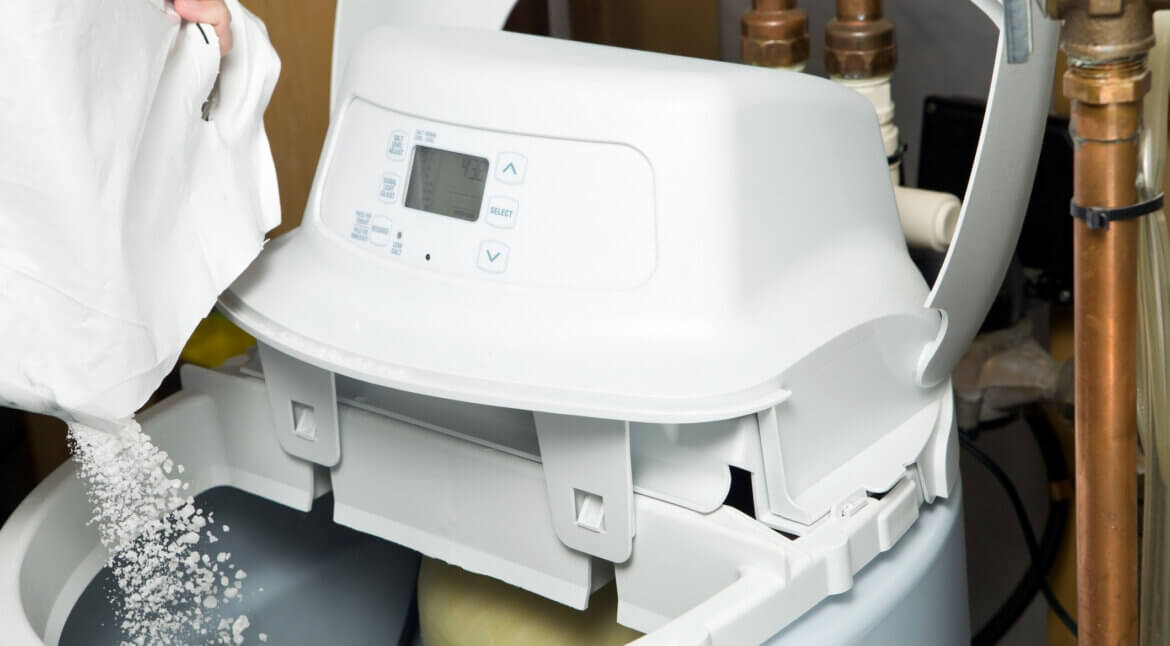
The most durable protection for appliances in hard water areas is treating the water before it reaches the appliances. A whole-home water softener installed at the main supply entry removes the calcium and magnesium that cause scale before the water reaches any fixture or appliance in the house.
Softened water extends appliance life, reduces cleaning product use, improves detergent effectiveness and eliminates the mineral film on dishes and glassware caused by hard water. It is the most comprehensive solution available and the one that requires the least ongoing appliance-level maintenance once installed.
If a whole-home treatment system isn’t the right fit for your household, there are targeted approaches that provide meaningful protection at a lower initial investment.
A dedicated water treatment device installed at the supply connection to the dishwasher or washing machine reduces the mineral load reaching that specific appliance without treating the entire household supply. These point-of-use solutions require periodic maintenance — filter changes or salt replenishment, depending on the system type — but they are significantly more effective than appliance-level cleaning cycles alone.
Regardless of what treatment approach you use, set a calendar reminder to inspect supply hoses on both appliances annually and replace them on a schedule. Most manufacturers recommend replacement every five years regardless of visible condition. Supply hose failures are among the most common sources of significant water damage in residential homes, and hoses in hard water environments age from the inside in ways that aren’t visible externally. Replacing hoses proactively is a low-cost step that eliminates one of the most reliably preventable appliance-related water damage events.
FAQs
How do I know if hard water is actually causing my appliance problems, or if something else is wrong?
The clearest indicators that hard water is impacting your appliance are cloudy or spotted glassware from the dishwasher despite correct detergent use, a washing machine that requires repeated cleaning cycles to stay odor-free, appliance components that have failed more than once within a short period or visible white mineral deposits at supply connections or on internal appliance surfaces. A water hardness test — available as an inexpensive strip test at most hardware stores — can confirm whether your supply water is in the range associated with scale damage. If your water tests as moderately hard or above and you’re seeing one or more of these patterns, hard water is likely a significant contributor.
I’ve replaced my dishwasher’s heating element twice in four years. Is that normal?
No. A heating element in a reasonably well-maintained dishwasher should last the life of the appliance under normal conditions. Two failures in four years is a strong signal that something in the operating environment is accelerating wear. In most cases, that something is scale accumulation from hard water. Each replacement element faces the same mineral-laden water as the one it replaced and will degrade on a similar timeline unless the underlying water quality issue is addressed. A plumber won’t replace the heating element, but can test your water hardness and install a treatment solution that would eliminate the scale accumulation driving the repeated failures. The cost of a water treatment installation is typically less than another round of appliance service calls and replacement parts.
Does using more detergent help in hard water areas, or does it make things worse?
Using more standard detergent in hard water typically makes things worse, not better. The calcium and magnesium ions in hard water react with most detergents, reducing cleaning effectiveness and leaving a soap-mineral residue that accumulates in the machine and on fabrics. Increasing the detergent dose increases the amount of residue rather than compensating for the reduced effectiveness. The more useful approaches are switching to a detergent formulated for hard water — which includes agents that counteract mineral interference — and using a rinse aid in the dishwasher, which helps prevent mineral film on dishes and glassware. Neither of these substitutes for treating the water itself, but they are more effective than simply using more of a standard product.
Can a plumber install a water softener just for the dishwasher and washing machine without treating the whole house?
Yes. A point-of-entry treatment device can be installed at the supply connection feeding a specific appliance rather than at the home’s main supply. This approach protects the targeted appliance from hard water damage without softening water throughout the house. This can be a practical option for renters, for homeowners who prefer unsoftened water at drinking fixtures or for situations where a whole-home system isn’t feasible. The device requires periodic maintenance and has a smaller treatment capacity than a whole-home softener, but it provides meaningful protection for the appliance it serves. A plumber can assess whether this approach is appropriate for your supply configuration and install it with proper shutoff access for servicing.
Call Plumbers 911 Today
If hard water is shortening the life of your dishwasher or washing machine, addressing the water is the step that ends the cycle of repairs. A plumber can test your water, evaluate your supply-side plumbing, and install a treatment solution that protects every appliance in the house — not just the ones already failing.
Our affiliated licensed, bonded, and insured contractors will guide you through the process and ensure all the plumbing work is done correctly. They employ highly qualified plumbers who receive over 10,000 hours of training and undergo rigorous background checks. Call Plumbers 911 today to speak with one of our contractors in your area.