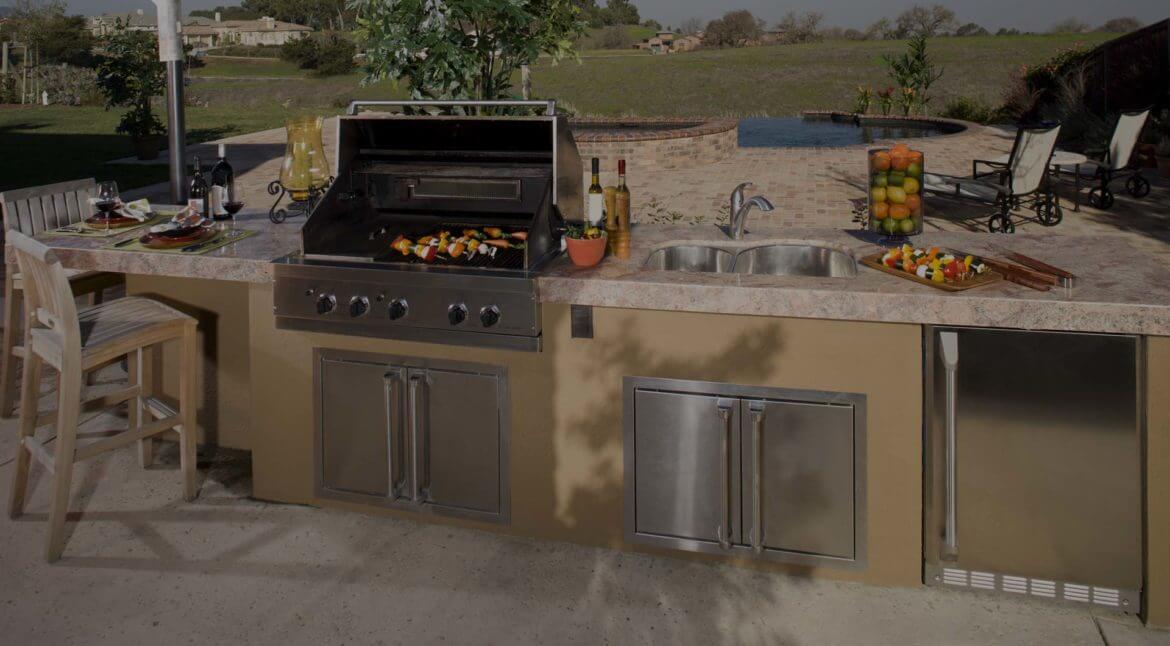
An outdoor kitchen becomes genuinely useful the moment it has running water. A prep sink eliminates the constant back-and-forth to the house. It keeps the cooking area functional and makes the space feel like a real kitchen, not just a patio with a grill.
Pairing that sink with a properly sized, permanently installed gas line adds range, reliability and cooking flexibility that a single grill on a hose connection can’t match.
Both upgrades require a licensed plumber. That’s true for the water supply and drain design on the sink side, and all gas line work. Plan both together, before any structure is built around them.
Call Plumbers 911 to connect with a local contractor who can scope and install both systems correctly.
Outdoor Kitchen Plumbing Services | Plumbers 911
What’s Happening
The outdoor kitchen has evolved from a seasonal grill setup to a genuine extension of the home’s living and entertaining space. Homeowners who built a basic patio kitchen five or 10 years ago — a grill, maybe a side burner and a small refrigerator — are increasingly looking to finish what they started.
They want the features that make the space fully functional. This often includes a prep sink with hot and cold water, a dedicated hard-piped gas supply and additional cooking appliances. A single hose-fed connection can’t reliably support those. For homeowners building new, the lesson from that earlier generation is simple: put the water and gas infrastructure in from the beginning. Don’t retrofit it later.
The sink is typically the feature that transforms how the space gets used. Without running water, every step that involves rinsing, filling, washing or cleaning means a trip inside. That interrupts the flow of cooking, and over time, it quietly discourages outdoor use. A prep sink keeps the cook in the space from start to finish. It makes the outdoor kitchen genuinely competitive with the indoor one for full-meal prep, not just grilling.
The gas line upgrade serves a parallel function. It replaces a hose-bib connection or a small portable tank with a supply that can support multiple appliances at once — no monitoring, no refilling mid-cook.
Why It Happens
Most outdoor kitchen sink installations run into trouble because the drain design is treated as an afterthought. Supply-side planning — running a water line from the house — tends to get attention early. Drain planning tends to get deferred until the structure is already taking shape, and by then, the options have narrowed.
An outdoor sink drain needs a clear path away from the home’s foundation. It needs the right slope to prevent standing water and a connection point — either tied into the home’s sanitary system or handled through an approved solution such as a dry well or French drain. The right choice depends on local code, the site’s grade and how far the kitchen sits from the home. All of that is far easier to sort out at the design stage than after the countertop is installed.
On the gas side, the most common planning gap is sizing the supply line for today’s appliance list rather than a realistic one. A homeowner who plans for a grill and a side burner now is statistically likely to add a pizza oven, a wok burner or a patio heater within a few seasons. A line sized for two appliances at modest BTU loads will be undersized for four. And upsizing a buried gas line after the patio is finished is far more disruptive than sizing it right the first time. A plumber can calculate the realistic total load for the full outdoor kitchen vision and size the line to match, leaving room for additions you haven’t bought yet.
Both systems are also affected by distance — specifically, the distance between the outdoor kitchen and the home’s utility connections. Every extra foot of run affects pipe sizing, pressure requirements and the cost and complexity of the trench work needed to protect buried lines. The same is true for gas. Longer runs require a larger-diameter pipe to maintain pressure at the appliance end, and that relationship isn’t linear. A kitchen in the far corner of a large yard may need a meaningfully larger pipe than one right next to the house, even with identical BTU demand. These calculations need to happen before the kitchen location is finalized, not after.
What You Can Safely Do Now
The most useful step before calling a plumber is a clear, specific picture of what you want the outdoor kitchen to do — not just what it looks like. Decisions about the sink’s location and size, the number and type of gas appliances, and hot-and-cold versus cold-only water all shape what the plumber needs to install. The more specific you are at the initial consultation, the more accurate the scope, and the less likely the project will expand mid-construction.
Finalize the outdoor kitchen footprint and orientation before the plumbing consultation. Where the sink and gas appliances sit relative to the home’s supply connections determines routing, pipe sizing and trench work. Settle on a location before the plumber arrives, and the consultation can yield a real scope rather than a range of estimates.
Create a complete gas appliance list, including BTU ratings where available. Include every appliance you plan to install now, plus anything you might realistically add in the next few years. A plumber uses this list to calculate the total load and size the supply line. Underestimate the list, and you get an undersized line. Overestimate by a modest margin, and it costs little while preserving capacity.
Decide on hot-and-cold water versus cold-only for the sink. Cold-only is the simpler install — a single supply line and a drain. Hot water means connecting to the home’s water heater or installing a dedicated point-of-use heater in the kitchen. That expands the scope and may affect permit requirements. Know which you want before the consultation, and it’ll focus the discussion.
Assess the grade between the outdoor kitchen and the home. Walk the path from the proposed location to the house. Note whether the terrain slopes away from the home, toward it, or sits relatively flat. Drain lines need to run downhill to work by gravity. A site uphill from the home’s connection point may need a different drain solution than one that naturally slopes away.
Locate your home’s gas meter or propane tank and note its position. Distance and routing between the gas source and the outdoor kitchen are the primary variables in gas line sizing and scope. Obstacles between the two — hardscaping, a concrete driveway, a garden wall — affect how the trench work is approached. Note them before the plumber arrives.
Check your community’s permit requirements for both systems. Outdoor plumbing connected to the home’s water or drain system and all gas line work require permits in most jurisdictions. Knowing this in advance sets realistic timeline expectations. It also confirms that your plumber will be pulling permits as part of the job, which they should.
When to Call a Plumber
Call a plumber before the outdoor kitchen structure is built. The single most common — and most preventable — problem is a sink or gas connection planned for a finished structure rather than built into it. Supply and drain lines for the sink, the gas supply run, and any conduit for future connections all need to be in the ground and roughed in before countertops, cabinetry and finish surfaces go in. A plumber involved at the design stage can confirm rough-in locations, identify the best entry points for buried lines, and ensure the structure is built around the plumbing, not the other way around.
For natural gas specifically, there’s no DIY option, regardless of experience level. Gas line installation and modification require a licensed plumber or gas fitter in every state. The work must be permitted and inspected before any appliance is connected and operated. This isn’t a formality — gas line sizing, material selection, pressure testing and the connection sequence all carry safety implications, which is exactly what the permit and inspection process verifies.
A plumber who pulls the permit, installs it and schedules the inspection gives you a fully documented gas system. That’s a system your insurance will recognize, and a future buyer’s inspector won’t flag.
What Plumbers See in the Field
Plumbers called to add a sink to an existing outdoor kitchen often see the same problem: the kitchen was built with no provision for a drain. The supply side was sometimes thought through, but the drain path was left for later. Eventually, there was a finished patio, a built-in grill cabinet and no obvious route to get wastewater away without tearing something apart.
In some cases, the sink was installed anyway, draining into a bucket under the counter or straight onto the patio surface. That creates standing water and drainage problems that compound over the course of a season. The fix is almost always more disruptive than the original installation would have been, and sometimes it requires partial demolition of the finished structure.
On gas calls, plumbers frequently find flexible connector hoses used in ways they weren’t intended: routed through enclosed cabinet spaces, kinked around corners or connected end-to-end to stretch a run that should have been hard-piped.
Flexible connectors are meant for the final short connection between a fixed supply point and an appliance, not as a substitute for a properly run supply line. Plumbers also regularly find outdoor gas connections with no dedicated shutoff valve. This means the only way to isolate the outdoor system is to shut off gas to the entire home. Both problems are correctable. Both are also entirely avoidable when a licensed plumber is involved from the start.
What a Plumber Will Do
When a plumber arrives to plan a sink and gas installation, the process starts with a site assessment: the proposed kitchen location, the distance and routing to the home’s water and gas connections, the site’s grade and drainage and any hardscaping that affects the trench route. For the sink, the plumber designs the supply and drain routing, selects the right pipe materials for buried outdoor installation and determines the drain solution — a sanitary tie-in, a dry well or a graded surface drain — based on the site and local code.
For the gas system, the plumber calculates the total BTU load for the planned appliance list, then sizes the supply pipe to deliver adequate pressure at the furthest appliance under full simultaneous load. From there, they route the supply from the meter or tank to the kitchen, install a dedicated, accessible outdoor shutoff valve, complete each appliance connection with properly rated fittings and pressure-test the entire system before anything is operated.
At project completion, the plumber coordinates the required inspections for both systems and hands over documentation of all permitted work. This record confirms the job was done to code and backs up any future warranty or insurance questions.
Prevention Tips
The most important seasonal task for an outdoor kitchen sink is end-of-season winterization. Shut the dedicated interior supply valve feeding the outdoor lines. Open the outdoor faucet to drain any remaining water from the run and leave the outdoor valve open so residual water can escape as temperatures drop. If the kitchen has a hot water connection, the plumber who installed it can advise on extra steps for your climate. A supply line left full of water through a freezing winter is one of the most preventable repairs in residential plumbing.
For the gas system, a brief visual check at the start of each season is good practice. Check the visible supply line for corrosion. Confirm each appliance’s flexible connector is free of kinks, cracks or abrasions. Verify the outdoor shutoff valve operates smoothly through its full range. If any connector shows weathering or a fitting shows surface rust, have a plumber evaluate it before you operate the appliance. An annual pressure test by a licensed plumber is a reasonable investment for a kitchen that sees regular use. It confirms the system’s integrity and gives you a dated service record.
Every two to three seasons, have a plumber walk through the full installation. They’ll assess buried supply lines where accessible, all valve and fitting components and the drain connection. Outdoor plumbing and gas components are subject to greater environmental stress than their indoor counterparts. A proactive check catches developing issues — a valve beginning to stiffen, a partially blocked drain, a fitting starting to corrode — before they become urgent mid-season repairs.
FAQs
Do I need both a plumber and a separate gas fitter, or can one contractor handle everything?
In most states, a licensed plumber is also licensed for gas line work, so one qualified contractor can handle both the sink’s supply and drain and the gas line for the appliances. Licensing does vary by state, so some jurisdictions may require a separate endorsement or a dedicated gasfitter license. When you call Plumbers 911, the referral process accounts for your location and connects you with a contractor licensed for both scopes. Confirm with the contractor, before work begins, that their license covers gas line installation in your state.
My outdoor kitchen already has a grill connected by a flexible hose to a hose bib. Do I really need to replace that with a hard-piped line?
For a single grill with no other gas appliances and a fairly short hose run, a properly rated flexible connection may be adequate. The limitations show up once you add appliances, extend the run past the connector’s rated length or route the hose through an enclosed space like a built-in cabinet. Hard-piped gas lines are the right solution for a permanent outdoor kitchen with multiple appliances. They’re sized for the full load, can be pressure-tested as a system, include a dedicated shutoff valve and leave a documented installation record. A plumber can assess your existing setup and tell you whether it’s adequate as-is or whether it should be upgraded while you’re adding the sink.
What happens if I skip the permit for the gas line or the outdoor plumbing?
Unpermitted gas work and unpermitted plumbing connections create several distinct problems. If a gas leak, fire or water damage event occurs, your homeowner’s insurance may deny the claim because the work wasn’t permitted or inspected. If you sell the home, a buyer’s inspector or the title process may catch the unpermitted work, which can delay the sale, reduce the price or require remediation before closing. Municipalities also levy financial penalties for unpermitted utility work. A licensed plumber pulls the required permits as a standard part of the job. It’s not optional, and a contractor who suggests skipping permits to save time or cost isn’t one you want anywhere near your gas infrastructure.
Can I add a utility sink to an outdoor kitchen that doesn’t have a drain connection yet?
Yes, but the drain solution needs to be designed for your site, not improvised. Options include connecting to the home’s sanitary drain system via a buried line — the most code-compliant approach in most jurisdictions — or installing an approved outdoor solution, such as a dry well or French drain, that disperses water into the soil, away from the home’s foundation. The right choice depends on local code, the distance to a viable sanitary connection and the site’s soil and grade. A plumber can evaluate your property and identify the most practical solution. What isn’t an option in most jurisdictions: letting sink wastewater drain freely onto a patio or into an unmanaged part of the yard.
Call Plumbers 911 Today
If you’re adding a sink and a gas line to your outdoor kitchen, get a qualified plumber involved before the structure is built. It’s safer and faster that way, especially since both systems require permits and professional installation that can’t easily be retrofitted after the fact.
Our affiliated licensed, bonded and insured contractors will guide you through the process and make sure all the plumbing work is done right. They employ highly qualified plumbers who receive over 10,000 hours of training and undergo rigorous background checks. Call Plumbers 911 today to speak with one of our contractors in your area.