There’s a special kind of panic that sets in when you wake up at 6 a.m., the house is 58 degrees, and the furnace is making a noise you’ve never heard before. It always seems to happen on the coldest morning of the year, usually on a weekend.
To make matters worse, in many instances, the whole mess could have been avoided with an hour of prep back in October.
Your heating system works hard all winter, but most of us ignore it until the moment it quits. A little attention before the first real freeze keeps your home warm, your energy bills reasonable, and your weekends free of emergency service calls.
This pre-winter HVAC checklist walks you through what to check, what you can safely handle yourself, which warning signs mean trouble, and when it’s time to call Plumbers 911 for a referral to a licensed HVAC contractor near you.
HVAC Maintenance | Plumbers 911
The Real Cost of Skipping Pre-Winter HVAC Maintenance
Skipping a tune-up feels like saving money, but it isn’t. A heating system that hasn’t been cleaned or inspected has to run longer and harder to keep up, and you pay for every extra minute on your utility bill.
The bigger risk is a breakdown when you can least afford one. Furnaces and heat pumps love to fail during the first hard cold snap, right when every HVAC company in town is booked solid. That means longer waits, after-hours rates and a few nights sleeping in a hoodie. Leave the house cold long enough, and you can end up with frozen pipes, which turns one problem into two or more.
Then there’s safety. A cracked heat exchanger, a blocked flue or a dirty burner can let carbon monoxide into your home. You can’t see it or smell it, but it can be deadly, and that’s exactly why a yearly inspection is so important.
Why Heating Systems Break Down in Winter
Dirty Air Filters
A clogged filter is the most common and most preventable cause of heating trouble. When dust and pet hair choke off airflow, your system strains to push warm air through the house. That strain can overheat parts, trip safety switches and wear out the blower motor early. A new filter costs a few dollars. A new motor costs a lot more.
Months of Sitting Idle
Your furnace or boiler spent all summer doing nothing. Meanwhile, dust settled on the burners, belts dried out, and small parts like igniters and flame sensors got dirty or weak. The first time the system fires up in the fall, all those little problems show up at once. A burning-dust smell for a few minutes on the first chilly day is normal. A furnace that won’t light at all is not.
Sudden Demand When Temperatures Drop
Heating systems don’t get to ease into winter. One week it’s 60 degrees out, the next it’s 20, and the thermostat is calling for heat around the clock. Any part that was hanging on by a thread tends to give out under that sudden workload.
Blocked Vents and Outdoor Units
A couch parked over a floor register. A rug covering a return vent. A pile of leaves hugging the heat pump. Each one restricts airflow, making your system work harder. High-efficiency furnaces that vent through a side wall have their own weak spot: snow drifts and ice can block the intake and exhaust pipes, shutting the furnace down completely.
Warning Signs Your Heating System Needs Attention
Your HVAC system usually drops hints before it quits. Keep your eyes (and ears) open for the following:
- Banging, squealing, grinding or rattling when the system starts up or runs.
- Some rooms feel toasty while others stay chilly, even with every vent open.
- The system turns on and off every few minutes, which pros call short cycling.
- A yellow or flickering burner flame on a gas furnace instead of a steady blue one.
- Heating bills creep up even though nothing about your routine has changed.
- More dust around the house than usual, or a musty smell when the heat kicks on.
- A carbon monoxide alarm going off. Get everyone outside right away, then call emergency services or your gas utility.
The Ultimate Pre-Winter HVAC Checklist
Grab a flashlight and a fresh air filter. Most of these steps take just a few minutes, and none require special tools. If anything involves a gas valve, an access panel or wiring, leave it for a pro.
- Replace the air filter. Then check it monthly through the heating season.
- Test the thermostat. Bump it up a few degrees and make sure the heat kicks on within a few minutes. Swap in fresh batteries while you’re there.
- Press the test button on every carbon monoxide and smoke detector. Replace weak batteries and any detectors past their expiration date.
- Walk through the house and make sure every supply and return vent is open and clear of furniture, rugs and curtains.
- Clear a few feet of space around your furnace and water heater. No storage boxes, paint cans or laundry piles near anything that makes heat.
- Rake leaves and sticks away from the outdoor heat pump and trim back any shrubs crowding it.
- Find your furnace’s outdoor intake and exhaust pipes, if it has them, and make sure nothing is blocking them.
- Hunt for drafts around doors and windows and seal them with weatherstripping or caulk. Your furnace shouldn’t have to heat the whole neighborhood.
- Switch ceiling fans to spin clockwise on low. That gently pushes the warm air hanging near the ceiling back down toward you.
- Book a professional tune-up while HVAC schedules still have plenty of open slots.
What Happens During a Professional HVAC Tune-Up
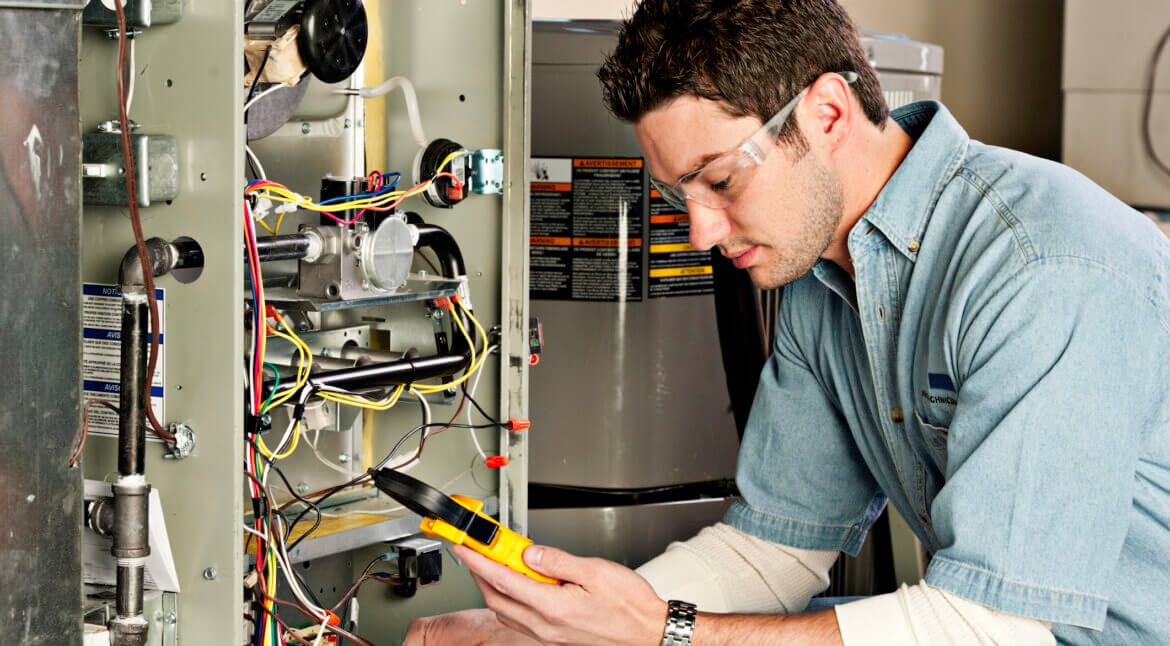
Your DIY checklist covers the basics. A professional HVAC maintenance visit goes after the parts you can’t safely reach. A Plumbers 911-affiliated contractor will typically start by inspecting the entire system, from the thermostat to the exhaust vent, to ensure it’s running safely and efficiently.
On a gas furnace, that usually means cleaning the burners and flame sensor, checking the igniter, inspecting the heat exchanger for cracks and testing for carbon monoxide. The technician will also check gas pressure, tighten electrical connections, lubricate moving parts and confirm the safety controls shut things down when they should. Heat pump visits add a look at refrigerant levels, the outdoor coil and the defrost cycle. Boilers get checked for proper pressure, healthy circulator pumps and leaks in the piping.
If the inspection reveals a worn part or a larger issue, the contractor will walk you through repair or replacement options. That way, you get to make the call on your schedule instead of in the middle of a January deep freeze.
Keeping Your Heating System Healthy All Winter
The checklist gets you ready. These habits keep you that way:
- Set a monthly phone reminder to check the air filter.
- Turn the thermostat back 7 to 10 degrees for about eight hours a day while you sleep or while you’re at work. According to the U.S. Department of Energy, it can save up to 10 percent a year on heating and cooling.
- Consider a programmable or smart thermostat so those temperature setbacks happen on their own.
- Keep the outdoor heat pump clear of snow and ice. Brush snow off gently and never chip at ice with a shovel or screwdriver.
- Check your furnace’s intake and exhaust vents after every heavy snowfall.
- Heading out of town? Keep the heat set to at least 55 degrees so your pipes don’t freeze while you’re gone.
- Schedule your tune-up at the same time every year so it never slips off the calendar.
Frequently Asked Questions About Pre-Winter HVAC Maintenance
When is the best time to schedule a furnace tune-up?
Early fall, ideally September or October. You beat the rush, get your pick of appointment times, and if something needs fixing, there’s still time to handle it before you really need the heat.
How often should I change my furnace filter in winter?
Check it once a month. Thin fiberglass filters usually need replacing every month, while thicker pleated filters can last up to three months. If you have pets, allergies or a smoker in the house, lean toward changing it more often.
Is it normal for my furnace to smell when I first turn it on?
A light burning-dust smell for the first few minutes of the season is normal. That’s summer’s dust burning off the burners. If the smell lasts for hours or smells electrical, shut the system off and call a pro. If you smell rotten eggs, that can mean a gas leak. Leave the house and call your gas company once you are safely outside.
Do I really need a tune-up every year if my system seems fine?
Yes. Plenty of problems, like a cracked heat exchanger or a weak igniter, don’t show obvious symptoms until the day they fail. Many manufacturers also require yearly professional maintenance to keep the warranty valid, so skipping it could cost you more than a little efficiency.
Should I repair or replace an old furnace?
It depends on its age and the size of the repair bill. Most furnaces last somewhere around 15 to 20 years. If yours is in that range, keeps needing repairs or needs one fix that would cost a big chunk of what a new system would cost, replacing it is often the smarter move. A licensed contractor can give you an honest look at both options.
Call Plumbers 911 Today
If you want peace of mind before the temperature drops, don’t wait for the first freezing night to find out something’s wrong with your heating system. Call Plumbers 911 for a referral to a top contractor in your area.
Our affiliated service techs are local, licensed and insured professionals with over 10,000 hours of training, including ongoing coursework on the latest techniques and equipment. Every tech passes a rigorous background check and agrees to routine drug testing before joining the network, so you can trust the job will be done right.