At one time or another, most homes encounter this: the toilet that keeps running after you flush, hissing away in the background until someone walks in and jiggles the handle. Most families know the trick. But do your holiday guests? And nobody wants Aunt Linda coming out of the bathroom to announce that “something’s wrong with your toilet.”
A running toilet is one of those problems that’s easy to live with and annoying to fix, so it tends to hang around. The good news is that most running toilets come down to a few parts, and many of the fixes take less time than a trip to the store for more paper towels.
Find out whether you can fix it yourself before the guests arrive, or call Plumbers 911 for a referral to a licensed plumber near you.
The Real Cost of a Running Toilet
That quiet hiss doesn’t sound like much, but it adds up. According to the EPA’s WaterSense program, a leaky toilet can waste around 200 gallons of water every day. That’s water you’re paying for without getting anything out of it.
A running toilet can also wear out its own parts faster. The fill valve keeps cycling on and off, and a slow leak can leave mineral stains in the bowl. If the problem is a cracked tank or a leaking connection, water can start damaging the floor or the ceiling below.
With company coming over for the holidays, there’s also the plain old embarrassment factor. A toilet that runs, gurgles or won’t flush right is an unwanted holiday conversation.
Why Your Toilet Keeps Running
A Worn-Out Flapper
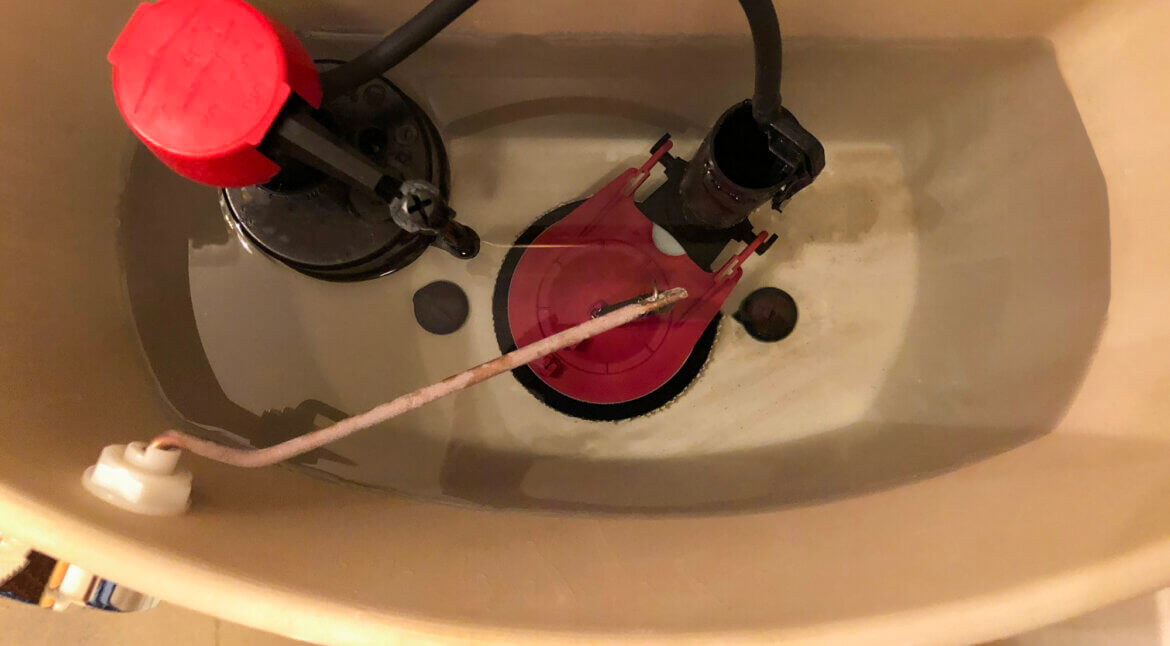
The problem is often the flapper, a rubber seal at the bottom of the tank that lifts when you flush and drops back down to hold the water in the tank. Over time, it gets stiff, warped or coated with mineral buildup and stops sealing tightly. Water slowly leaks into the bowl, the tank refills to make up for it, and the cycle repeats all day. This is the number one cause of running toilets, and it’s usually the easiest fix.
A Chain That’s Too Short or Too Long
Another possible cause is the chain that connects the flush handle to the flapper. If it’s too tight, it holds the flapper slightly open. If it’s too loose, it can get tangled or caught under the flapper. Either way, water keeps escaping. This is often why jiggling the handle works: you’re knocking the chain loose so the flapper can drop.
Float Set Too High
The float tells the fill valve when to stop filling the tank. If it’s set too high, water keeps rising until it spills into the overflow tube, the open pipe in the middle of the tank, and runs into the bowl. If you see water trickling down the overflow tube, the float is the likely culprit.
A Tired Fill Valve
The fill valve is the tall part on the left side of the tank that refills it after every flush. When it wears out or gets clogged with sediment, it may not shut off completely, or it might turn on by itself every few minutes. That random refilling sound in the middle of the night, sometimes called phantom flushing, often points here.
Cracks and Bigger Problems
Less often, the problem is a crack in the tank or overflow tube, or a worn-out flush valve seat that the flapper can’t seal against. These are tougher fixes, and sometimes replacing the toilet makes more sense than repairing it.
How to Tell If Your Toilet Is Leaking
Not every running toilet is loud about it. Watch and listen for these signs:
- A hissing or trickling sound coming from the tank long after a flush.
- The tank refilling on its own when nobody has used the toilet.
- Water running down the inside of the bowl between flushes.
- Having to jiggle or hold the handle down to get a full flush, or to make it stop running.
- Water spilling into the overflow tube in the middle of the tank.
- A water bill that’s higher than usual with no other explanation.
- Water on the floor around the base of the toilet, which could mean a leak that needs a pro.
Simple Fixes You Can Try Today
If you are willing to stick your hand inside the toilet tank, then you might be able to perform some of the following repairs. Most of these take a few minutes and require only a towel, a pair of rubber gloves and possibly a trip to the hardware store. If you do have to go to the hardware store, remember to bring the old part with you so you can match it.
Here are some simple fixes most homeowners can perform:
- Try the dye test first. Add a few drops of food coloring to the tank, don’t flush, and wait about 15 minutes. If color shows up in the bowl, the flapper is leaking.
- Adjust the chain so it has about a half inch of slack when the flapper is closed. Trim any extra so it can’t get caught.
- Clean the flapper and the rim it seals against. Turn off the water, flush to empty the tank and wipe away any mineral buildup or grime.
- Replace the flapper if it’s stiff, warped or cracked. Turn off the water supply valve behind the toilet, flush, unhook the old one and snap on the new one.
- Lower the float. Depending on your toilet, you’ll either turn an adjustment screw or slide a clip down the fill valve. Aim for a water level about an inch below the top of the overflow tube.
- If the fill valve keeps running after all that, it may need to be replaced. This is a doable DIY job for a handy homeowner, but if you’re not comfortable working with the water supply line, it’s a quick job for a plumber.
When to Call a Plumber for a Running Toilet
If you’ve tried the basics and the toilet still won’t quit, or you’d rather not spend the day before Thanksgiving with your arm in a toilet tank, a Plumbers 911-affiliated contractor can take care of the problem.
Keeping Your Toilet Running Right (But Not Running Constantly)
A few easy habits help keep the hiss from coming back:
- Listen for running water every now and then, especially after a flush in a quiet house.
- Do the food coloring test a couple of times a year.
- Skip the drop-in tank tablets with harsh chemicals. They can break down rubber flappers and seals faster.
- Replace the flapper every few years, or as soon as it looks warped or worn.
- Only flush toilet paper. Wipes, paper towels and other products cause clogs, not just leaks.
- Know where the shutoff valve behind each toilet is, and make sure it turns, so you can stop an overflow fast.
Frequently Asked Questions About Running Toilets
Why does jiggling the handle stop my toilet from running?
Jiggling the handle usually helps the flapper drop back into place or frees a chain that’s caught. It’s a temporary fix. If you have to do it often, the chain needs adjusting or the flapper needs replacing.
How much water does a running toilet waste?
It depends on the size of the leak, but the EPA’s WaterSense program estimates a leaky toilet can waste around 200 gallons a day. Even a small, silent leak can add up to thousands of gallons over a few months.
Why does my toilet refill by itself every so often?
That’s usually a slow leak past the flapper. As water seeps into the bowl, the tank level drops until the fill valve kicks on to top it off. A dye test will tell you for sure.
Can I fix a running toilet myself?
Often, yes. Adjusting the chain or float, cleaning the flapper or swapping it for a new one are beginner-friendly jobs. If the fill valve or flush valve needs replacing, there’s water on the floor or the tank is cracked, it’s a good time to call a pro.
Is it worth fixing an old toilet, or should I replace it?
If the only problem is a worn flapper or fill valve, a repair is usually the way to go. If the toilet is cracked, clogs constantly or needs several parts replaced, a new, more water-efficient toilet may save you money over time. A plumber can help you weigh the options.
Call Plumbers 911 Today
If your toilet is still running, clogging or leaking and guests are on the way, don’t wait for the holiday rush to fix it. Call Plumbers 911 for a referral to a top contractor in your neighborhood.
Our affiliated licensed, bonded and insured contractors will guide you through the process and ensure all the plumbing work is done correctly. They employ highly qualified plumbers who receive over 10,000 hours of training and undergo rigorous background checks.