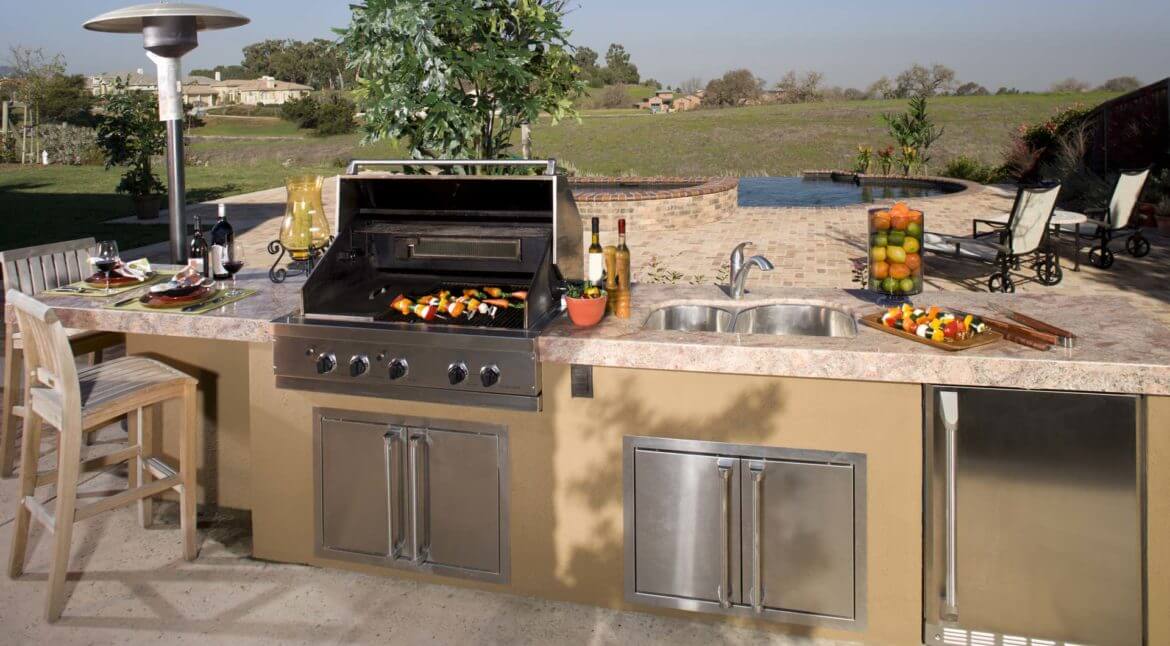
As the weather cools and the days get shorter in Boston, it’s time to think about closing your outdoor kitchen for the winter. Taking the right steps now will protect your investment, prevent costly damage and make reopening your kitchen next spring a breeze.
Outdoor kitchens have unique plumbing and appliance needs, so it’s important to winterize everything properly.
Why winterizing your outdoor kitchen matters
Outdoor kitchens are exposed to the elements, which means pipes, faucets and appliances are at risk of freezing, cracking or corroding when temperatures drop. Water left in supply lines or appliances can freeze and expand, causing pipes to burst and fittings to fail. This can lead to leaks, water damage and expensive repairs in the spring.
Proper winterization protects your outdoor kitchen’s plumbing, appliances and surfaces, ensuring everything is ready to use when warm weather returns.
Steps to close your outdoor kitchen for the winter
Shut off the water supply
The first and most important step is to turn off the water supply to your outdoor kitchen. Locate the shutoff valve inside your home or in a protected area. Once the supply is off, open all outdoor faucets and fixtures to drain any remaining water from the lines.
Drain and blow out water lines
Simply turning off the water isn’t enough. Water left in pipes can freeze and cause damage. Use compressed air to blow out any remaining water from supply lines, faucets and appliances. This step is especially important for kitchens with sinks, ice makers, dishwashers or refrigerators with water dispensers.
Disconnect and drain appliances
Disconnect any appliances that use water, such as ice makers, refrigerators or dishwashers. Drain all water from hoses and lines. Remove filters and store them indoors if possible.
Clean and protect plumbing fixtures
Clean all sinks, faucets and drains thoroughly. Remove any debris or food particles that could cause odors or clogs over the winter. Cover faucets and exposed plumbing with insulated covers to protect them from freezing temperatures.
Shut off and clean gas lines
If your outdoor kitchen includes a gas grill or cooktop, shut off the gas supply at the main valve. Clean the grill, burners and any other gas appliances. Disconnect propane tanks and store them in a safe, dry location.
Store or cover appliances and furniture
Store small appliances, cushions and utensils indoors. Cover larger appliances, grills and countertops with weatherproof covers to protect them from snow, ice and debris.
Inspect for needed repairs
While winterizing, check for leaks, worn hoses or damaged fittings. Addressing minor issues now can prevent bigger problems later.
Why call Plumbers 911 Boston for outdoor kitchen winterization?
Winterizing an outdoor kitchen is more complex than just draining a hose. It requires knowledge of plumbing systems, appliances and local codes. Here’s why you should call Plumbers 911 Boston for a contractor referral:
- Licensed and Insured Contractors: Plumbers 911 Boston connects you with local plumbers who are licensed, bonded and insured.
- Extensive Training: Our contractors employ plumbers with over 10,000 hours of training and rigorous background checks.
- Comprehensive Service: Professionals ensure every water line, appliance, and fixture is properly winterized.
- Code Compliance: All work meets local plumbing codes, so you avoid surprises in the spring.
- Peace of Mind: With Plumbers 911 Boston, you know your outdoor kitchen is protected and ready for next season.
Schedule your outdoor kitchen winterization today
Don’t wait until the first freeze to close your outdoor kitchen. Proper winterization now saves you time, money and stress come spring. Call Plumbers 911 Boston for a referral to a trusted local plumbing contractor who will guide you through the process and ensure all the work is done correctly.