If your boiler is making clanks, bangs or a “kettling” rumble, lower the thermostat, check the pressure and shut down the system. Take immediate action if you smell gas, see leaks or hear violent banging.
Persistent noise usually points to trapped air, scale buildup, low water flow or pressure/temperature issues that a licensed plumber, such as those affiliated with Plumbers 911, should diagnose and fix.
What’s happening
Boiler noises are your system’s way of signaling that water, steam or metal parts are moving in ways they shouldn’t. Some sounds are minor (like light ticking as pipes expand), while others (such as sharp banging or a roaring “kettle” sound) can indicate overheating, restricted flow or pressure problems.
Within the first few minutes of noticing new sounds, treat it as a safety-and-damage-prevention issue rather than a comfort issue. The goal is to stabilize the system, avoid overheating and prevent leaks or component failure.
\Check out: Boiler repair and emergency plumbing help
Why it happens
Kettling (rumbling, popping, “tea kettle” sound) often happens when mineral scale builds up on a heat exchanger or internal surfaces, causing water to overheat and form steam bubbles. Those bubbles collapse, creating a rumbling or popping noise, especially during heat-up.
Banging or clanking can come from “water hammer” in connected piping, loose components or rapid changes in water flow. In hydronic systems, trapped air and circulation issues can also create knocking sounds as water movement becomes uneven.
Whistling or squealing may indicate restricted flow through a valve, partially closed isolation valves or a circulator/pump issue. In some cases, it can also be related to pressure regulation problems.
What you can safely do now
- Lower the thermostat a few degrees to reduce demand and see if the noise settles during a gentler cycle.
- Check the pressure gauge (if your boiler has one) and note the reading so you can report it accurately.
- Look for visible leaks around the boiler, near valves and along nearby piping.
- Listen for where the sound is loudest (boiler cabinet, near a pump, at a specific pipe run) and write it down.
- Confirm key valves are fully open (only if you know which valves are intended to remain open during normal operation).
- If you smell gas, see scorching or hear violent banging, shut it down and leave the area and contact a qualified professional immediately.
When to call a plumber
Call a plumber immediately if the noise is new, getting louder or repeating every cycle, even if the heat is still working. Noise is often an early warning sign, and waiting can turn a manageable repair into a leak, shutdown or component replacement.
Call immediately (or shut down and seek help) if you notice water leaking, pressure that won’t stabilize, a burning smell, soot-like residue or any gas odor. Also call if the boiler is short-cycling, failing to heat or making sharp banging that shakes pipes or radiators.
What plumbers see in the field
In the field, plumbers commonly find kettling tied to scaling and restricted flow, especially in systems that have not been flushed or serviced on a consistent schedule. They also frequently see banging linked to air in the system, circulation problems or valves that are not operating correctly.
When homeowners describe the sound clearly — including details such as when it occurs, frequency, how long it lasts and whether pressure changes — diagnosis is faster and more accurate. This documentation also helps prioritize safety checks before any adjustments are made.
What a plumber will do
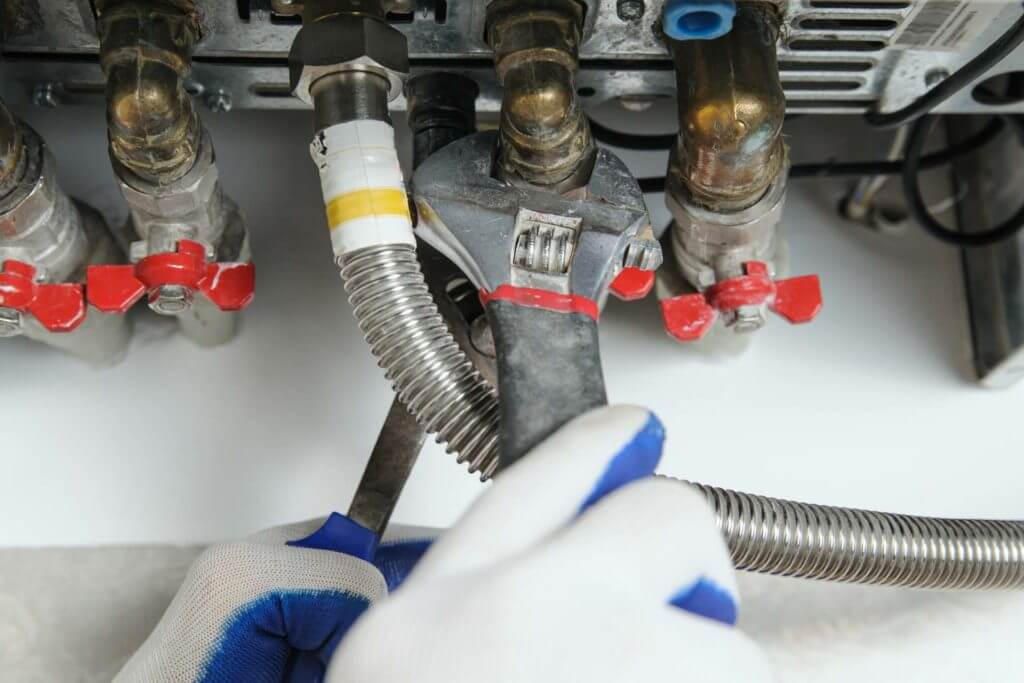
A plumber will typically start with a safety inspection, then verify pressure/temperature readings and confirm the system is operating within manufacturer specifications. Next, they will isolate likely causes by checking circulation, valves, expansion components and any signs of scaling or restricted heat transfer.
Depending on the findings, the plumber may recommend steps such as bleeding air (where applicable), correcting flow restrictions, servicing or replacing a faulty component or performing cleaning/flush procedures. The objective is to eliminate the cause of overheating, pressure instability or abnormal flow that creates the noise.
Prevention tips
Schedule routine maintenance so slight pressure, flow and component issues are caught before they become noisy failures. Consistent servicing also helps reduce scaling-related problems that can lead to kettling.
Keep the area around the boiler clear, and pay attention to early changes, as new ticking, mild rumbling or short-cycling can be a warning. If you hear recurring noises, ask a plumber about system cleaning, flow verification and any water-quality steps appropriate for your setup.
FAQs
1) Is a noisy boiler dangerous?
It can be, depending on the sound and accompanying symptoms. If there’s a gas smell, leaking water, burning odor or violent banging, shut it down and contact a professional.
2) What does “kettling” mean in a boiler?
Kettling is a rumbling or popping sound often caused by scale buildup or restricted flow, which can cause water to overheat and form steam bubbles. When those bubbles collapse, they create the noise.
3) Why does my boiler bang when it turns on?
Banging at startup can be caused by trapped air, sudden flow changes or pressure-related issues. It is a sign that the system should be checked before it worsens.
4) Can I fix boiler noises myself?
You can do basic, safe checks, such as lowering the thermostat, checking for leaks and noting pressure readings. A licensed plumber should handle repairs involving internal components, gas or other pressure problems and repeated repairs.
Call Plumbers 911
If you’re dealing with a boiler making noise right now, it’s safer and faster to get a qualified plumber involved before the problem escalates, especially if the safe steps haven’t resolved it.
The affiliated, licensed, bonded and insured contractors affiliated with Plumbers 911 will guide you through the process and ensure all plumbing work is done correctly. They employ highly qualified plumbers who have completed over 10,000 hours of training and undergone rigorous background checks. Call Plumbers 911 today for a referral to speak with a contractor in your area.