
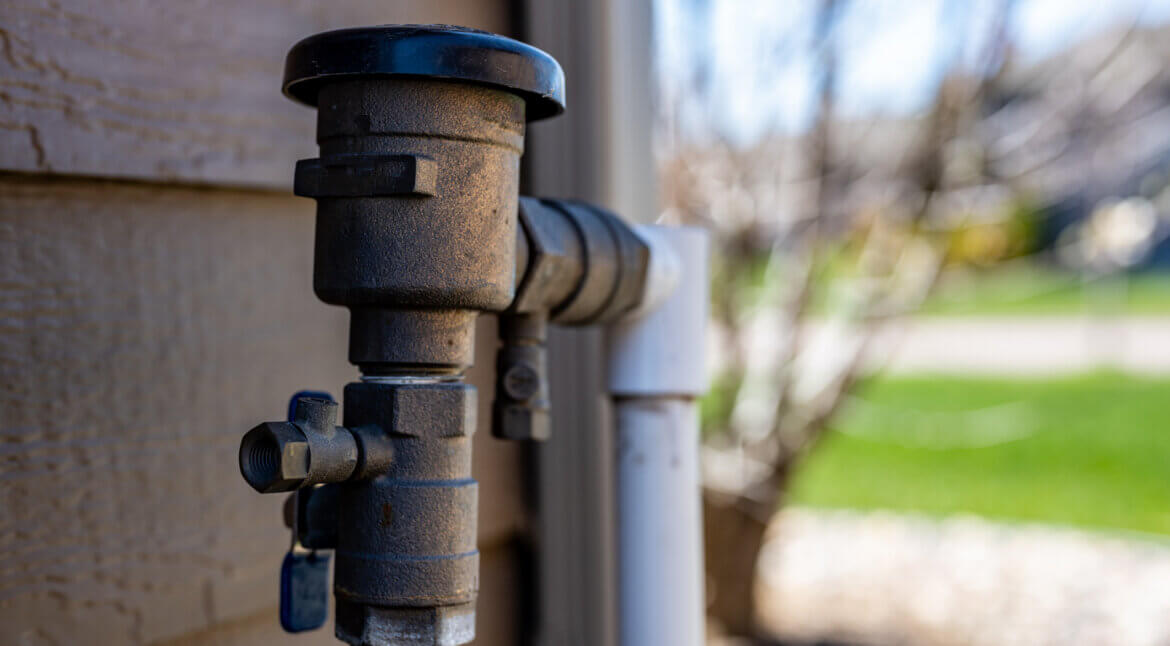
If your property has a backflow prevention device, plan to have it tested annually by a qualified plumber to confirm it is working and document compliance.
Annual backflow testing protects clean water by detecting valve failures early, before contamination, service interruptions or penalties.
If you need your backflow prevention device tested, call Plumbers 911 for a referral to a trusted local plumber.
Learn More: Backflow prevention: what it is and why it matters
What’s happening
Backflow occurs when water flows in the wrong direction and can pull contaminants into the clean water supply. A backflow prevention assembly is designed to stop that reverse flow, protecting drinking water in homes and commercial buildings.
Annual backflow testing is a controlled check of the device’s internal valves and seals. The goal is simple: verify the assembly closes properly under specific pressure conditions so it can do its job when the system is stressed.
Why it happens
Backflow risk increases when there is a pressure change in the water system. That can happen due to water main breaks, firefighting activity, pump issues or high-demand events that cause a drop in supply pressure.
Cross-connections also drive the need for testing. Irrigation systems, boilers, chemical dispensers, hose bibs and certain commercial equipment can create pathways through which non-potable water could enter the potable line if protection fails.
Even when a device is installed correctly, components wear out. Springs weaken, rubber seals degrade, debris builds up and valves can stick—so a device that worked last year may not pass this year.
What you can safely do now
Start by locating your backflow prevention device and confirming you can access it safely. Do not disassemble the unit or loosen fittings, since that can cause leaks or compromise the assembly.
Gather basic information before you call: device location, any visible model/serial number details and whether you have prior test reports. This helps the plumber prepare and reduces delays.
- Keep the area around the device clear and accessible
- Look for obvious leaks, corrosion or standing water around the assembly
- Note any recent plumbing work, irrigation changes or equipment additions
- Avoid turning valves unless you are trained and authorized to do so
- If you suspect contamination (odor, discoloration), stop using the water and call a plumber immediately
When to call a plumber
Call a plumber if you know you have a backflow device and it is due for annual testing, even if everything seems fine. Testing is preventive by design and is often required.
Also, call if you see leaking at the relief port, persistent dripping, corrosion or changes in water pressure after irrigation or when equipment runs. If a device fails a test, a plumber should repair or replace it and retest to confirm protection.
If you manage a property with multiple devices, call for an inventory and testing schedule. Missing a test window can create compliance issues and increase risk.
What a plumber will do
A plumber will identify the device type (for example, reduced pressure assemblies or double check valves) and confirm it is appropriate for the application. They will then connect calibrated test gauges to the test ports and perform a step-by-step procedure to measure valve performance.
If the device passes, the plumber will document the results and provide the paperwork typically required for records. If it fails, they will explain whether a rebuild kit, cleaning or replacement is the safest option, then retest after repairs.
Prevention tips
Treat annual backflow testing as part of your routine risk management, alongside smoke alarms and HVAC maintenance. A consistent schedule helps prevent last-minute compliance scrambles and reduces the chance of discovering a failure only after an incident.
Protect the device from damage. Keep it accessible, avoid impacts from landscaping or storage, and prevent freezing where applicable, since freeze damage can crack housings and ruin internal components.
If you add new equipment that connects to the water supply—like irrigation, boilers or chemical feed systems—ask a plumber whether additional backflow protection is needed. The right device depends on the level of hazard and how the system is used.
FAQs
- What is annual backflow testing?
- Annual backflow testing is a performance test of your backflow prevention device, conducted by a licensed plumber using calibrated gauges. The plumber checks that internal valves close properly under pressure and prevent reverse flow, then documents the results for compliance records.
- Is annual backflow testing required everywhere?
- Backflow testing requirements vary by jurisdiction, device type, and property use. Most areas require annual testing for commercial properties and irrigation systems, and many require it for certain residential applications as well. Contact your local water authority or a licensed plumber to confirm what applies to your property.
- What happens if a backflow preventer fails the test?
- If your backflow preventer fails the annual test, a plumber will assess whether it can be repaired with a rebuild kit, cleaned, or needs full replacement. Once the issue is addressed, the device is retested to confirm compliance and your water supply is protected. Failure must be corrected promptly in most jurisdictions.
- Can I test my backflow preventer myself?
- In most cases, no. Annual backflow testing requires calibrated gauges, a specific step-by-step procedure, and official documentation that most jurisdictions require to be completed by a licensed plumber or certified backflow tester. Attempting to test the device yourself will not satisfy compliance requirements and could void any existing certifications.
Call Plumbers 911 Today
Don’t let a missed test window put your property out of compliance. Whether you’re due for annual backflow testing, unsure of your requirements, or dealing with a device that needs repair, getting a qualified plumber involved early is the safest and most straightforward path forward.
Our affiliated licensed, bonded and insured contractors will guide you through the process to ensure all plumbing work is done correctly.
They employ highly qualified plumbers who receive over 10,000 hours of training and undergo rigorous background checks. Call Plumbers 911 today to speak with one of our local contractors in your area.

 Please wash your hands frequently. Washing with soap and water for twenty seconds is the preferred method, however when water is not available, please use an alcohol based hand sanitizer containing at least 60% alcohol.
 Practice social distancing by staying at least six feet away from another person.