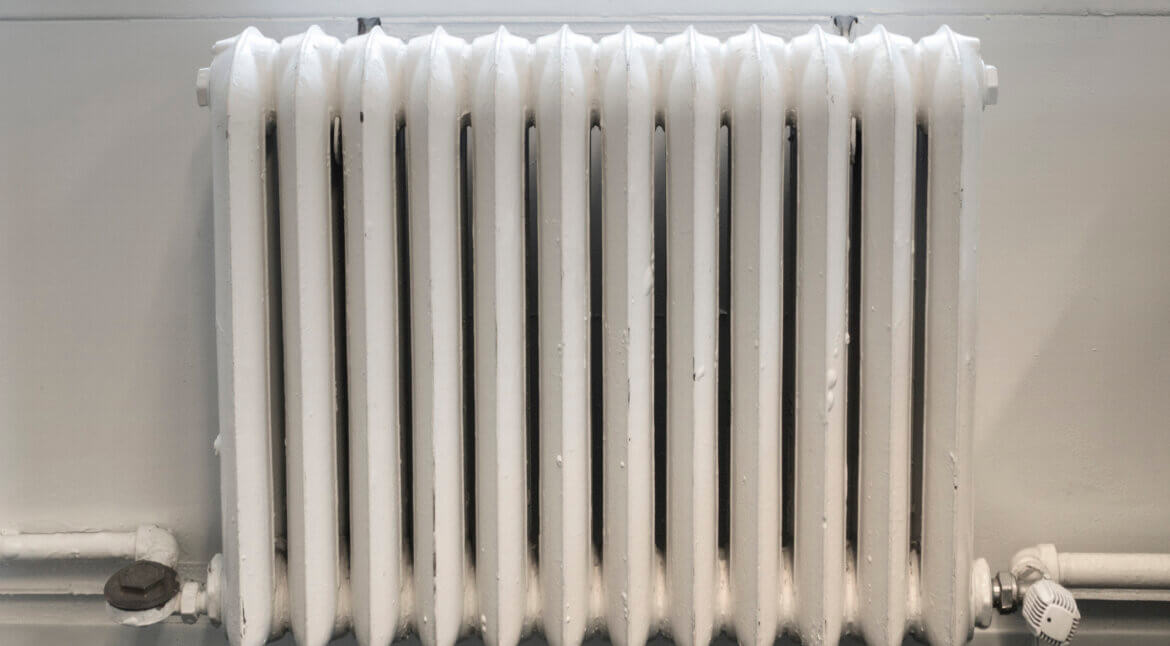
Cast iron radiators and steam systems heat homes in greater Boston by moving steam through pipes to radiators, where it releases heat and condenses back into water. When the system is balanced, radiators heat evenly and quietly and condensate returns without pooling.
If cast iron radiators or a steam system is noisy, uneven or leaking, start with safe checks: Verify thermostat settings, keep radiator valves fully open and watch for water around vents and piping. Ongoing issues usually involve venting, pressure or condensate return problems that require a qualified plumber to diagnose and correct.
When something is off — like venting, pressure or drainage — you may hear banging, get cold spots or see spitting at vents. These symptoms are often early warnings that the system is not moving steam and condensation the way it should.
Check out: Boiler and steam heating service
Why it happens
Steam heat issues commonly come from venting problems, such as failed radiator vents or main vents that no longer release air efficiently. When air cannot escape, steam cannot fill the radiator evenly, which leads to slow heating and temperature swings.
Another frequent cause is incorrect pressure or poor condensate drainage. If condensate cannot return properly, it can pool in pipes and create banging when steam hits trapped water.
What you can safely do now:
- Keep radiator supply valves fully open (steam valves are typically designed to be fully open or fully closed, not partially throttled).
- Check for water around radiator vents and note whether vents hiss constantly, spit or stay silent during a heating cycle.
- Listen for where banging occurs (near a radiator, along a pipe run or near the boiler) and write down when it happens.
- Confirm the thermostat is operating normally and not causing rapid on/off cycling.
- Keep the boiler area clear and look for visible leaks at accessible piping and fittings.
- Do not attempt to disassemble vents or adjust internal boiler controls unless directed by a qualified professional.
When to call a plumber
Call a plumber if you have repeated banging, radiators that won’t heat, vents that spit water or any visible leaking at the boiler, piping or radiator connections. Also, call if the system is short-cycling, produces inconsistent heat or if you notice a persistent burning smell.
If you see signs of corrosion, recurring water on the floor or you need to add water frequently, treat it as a priority. Steam systems are sensitive to pressure and water level, and small issues can escalate into larger repairs.
What a plumber will see in the field
In the field, plumbers often find that uneven heat and slow radiators are caused by failed vents, missing main venting or incorrect pressure settings. They also commonly see banging caused by condensation that cannot drain properly due to pitch issues, blocked returns or aging components.
In some instances, they discover Boston homeowners unintentionally create problems by partially closing radiator valves or replacing vents with mismatched parts. When the system is evaluated as a whole — boiler, vents, piping and returns — solutions are typically more durable.
H2 What a plumber will do
A plumber will start with a system overview: Radiator behavior, venting, boiler operation, and any visible leaks or corrosion. They will then verify that the system is operating within safe ranges and that steam distribution and condensate return are functioning correctly.
Based on the findings, the plumber may replace failed vents, adjust the venting strategy, address drainage/return issues or service boiler-side components that affect pressure and cycling. The goal is to restore balanced heat, reduce noise and prevent water damage.
Prevention tips
Use a consistent maintenance routine before and during the heating season, focusing on early warning signs such as new hissing, spitting vents or uneven radiator temperatures. Addressing venting and minor leaks early helps prevent water damage and reduces the chance of banging.
Avoid partial valve positions on steam radiators, keep vents unobstructed and have a plumber evaluate system balance if you’re seeing recurring cold rooms or frequent cycling. Preventive service is typically more effective than repeated spot fixes.
FAQs
1) Should steam radiator valves be fully open?
In most steam systems, yes, radiator supply valves are designed to be fully open or fully closed. Partially closed valves can trap condensation, contributing to banging.
2) Why is my steam radiator vent hissing all the time?
A brief hiss as air escapes is normal, but constant hissing may indicate a failing vent or a system that is not venting correctly. A plumber can confirm whether the vent is mismatched or the system needs balancing.
3) What causes banging in steam pipes?
Banging often happens when steam hits pooled water (condensate) in piping, sometimes due to pitch, blocked returns or venting/pressure issues. Persistent banging should be evaluated to prevent damage.
4) Can I replace a steam radiator vent myself?
Because vent selection and system balance matter, it is safer to have a qualified plumber confirm the correct vent type and settings. Incorrect venting can worsen uneven heat or noise.
Call Plumbers 911 Boston
If you’re dealing with steam radiator and steam system problems in your Boston home, it’s safer and faster to get a qualified plumber involved before the problem escalates.
The affiliated, licensed, bonded and insured contractors in Plumbers 911 Boston will guide you through the process and ensure all plumbing work is done correctly. They employ highly qualified plumbers who have completed over 10,000 hours of training and undergone rigorous background checks. Call Plumbers 911 Boston today for a referral to speak with an affiliated contractor in the greater Boston area.